VPN-Friendly Casinos in Australia: What to Check
 Available in AU

ACMA-related ISP blocks may stop a domain resolving, while a VPN does not confirm that an offshore casino is licensed or permits VPN access.
Table of Contents
- What a VPN Changes When an Australian Casino Site Is Blocked
- The Licensing Check Matters More Than the “VPN-Friendly” Label
- VPN-Friendly Casino Claims in 2026: What They Actually Tell You
- Crypto and No-KYC Claims Don’t Make the Risks Disappear
- Can You Use a VPN to Play? Know What It Does—and Doesn’t—Do
- Bitcoin-Compatible Casino Searches: Check the Australian Payment Rules First
- A “Casino VPN” Is a Connection Tool, Not a Casino Safeguard
- Does a Casino Allow VPN Connections? Check Its Terms, Not the Slogan
- Searching for a Shuffle Casino VPN Policy? Don’t Assume One
- VPN Slots and Changing Access: Why a Working Connection Can Still Fail
What a VPN Changes When an Australian Casino Site Is Blocked
When an offshore casino site will not load, it is easy to assume the site itself is down. Sometimes the obstacle is closer to home: the connection between your device and the internet provider. The Australian Communications and Media Authority (ACMA) can have internet service providers block access to offshore gambling sites. That can affect what happens before your browser even reaches the site.
A common method is DNS blocking. DNS is the system that matches a domain name—the address you type or tap—to the technical address computers use to find a server. If your provider’s DNS service is instructed not to resolve a blocked domain, your browser cannot get the destination address through that route. The result may look like a failed page, an error message or a site that appears unreachable.
That does not necessarily mean the casino’s server has vanished. It means your connection may be stopped at the name-resolution stage. I used to read a blank page as a sign that a site was having a temporary wobble. Sometimes that was possible; a block can produce much the same frustration. A screen alone does not tell you which explanation is right.
What the provider can see
Without a VPN, your device typically asks a DNS resolver to look up the domain. If that request goes through your internet provider, the provider can see the domain being requested and may apply a block at that point. The DNS lookup is the important part: the provider does not need to inspect the casino’s games or account pages to prevent the domain from resolving.
A VPN changes the route. It encrypts the connection between your device and the VPN server. Your internet provider can see encrypted traffic going to that server, but it does not see the casino domain in the same way as it would in a direct request. The VPN server then handles traffic onward from there. In practical terms, the ISP sees a connection to the VPN rather than a readable request for the blocked casino address.
Mobile Casino Access in Australia: Apps & Pokies
That distinction matters. A VPN does not remove the block from the provider’s network or make the casino address available through the provider’s DNS. It changes which connection the provider can observe. If the VPN server is outside Australia, the connection can also mask your Australian IP address and get around the DNS restriction. The website may then receive the VPN server’s address rather than your home connection’s address.
A connection can appear to work for that reason. The page may load where it previously did not, because the request is taking a different route and the ISP is no longer resolving the casino domain directly. But “it opened” describes a technical outcome, not a verdict on the site. I learned that one the hard way: access feels like an answer, even when it only answers the narrow question of whether a page can be reached. Not the same thing.
Inclave Casinos in Australia: Rules and Search Claims
There is another limit to the simple picture. DNS blocking is one layer of network access, while a website can apply its own checks after a page starts loading. So a VPN route that avoids an ISP-level DNS block does not mean every part of the site will behave the same way. The connection might reach the front page and still fail elsewhere. A changed route is not a universal key.
It also helps to separate the VPN’s role from the browser’s view of a failed site. A DNS error can point to a name-resolution problem, while a timeout or a refusal can arise for different reasons. Those messages are not reliable proof on their own of who stopped the connection. A VPN changes what your provider can see on the route to its server; it cannot make every network or website response transparent to you.
So when someone says a VPN lets them reach a blocked casino, the technical meaning is limited: encryption hides the destination from the ISP along that part of the route, and an overseas VPN server can mask the Australian IP and avoid the ISP’s DNS restriction. That explains a change in access. It does not establish that the operator is lawful, that the site is safe, or that the connection will keep working.
Attention: A successful page load via VPN is a technical outcome of network plumbing, not a clean bill of health or an endorsement of the site.
I would not treat a successful load as an endorsement. The browser has reached a page; nothing more has been proved. A network block is about access at the ISP level, and a VPN changes the route and the information visible to that ISP. That is useful context, but it is still just network plumbing. A loaded page is not a clean bill of health.
The Licensing Check Matters More Than the “VPN-Friendly” Label
I used to treat a polished site and a confident licence badge as evidence that someone had checked the important parts. That was backwards. For an Australian reader, the first question is not whether a casino accepts a VPN connection. It is whether the service can lawfully offer online casino games to people here.
The Interactive Gambling Act 2001 prohibits operators from providing online casino games to people living in Australia. Australia does not issue an online casino licence, so there is no local licence an offshore site can show as permission to offer those games here. A foreign licence does not change that position. A VPN connection does not change it either.
“Offshore” is a plain description, not a stamp of approval: for an Australian player, it means an online casino without an Australian licence. That label alone does not tell you whether a particular operator is reliable, or whether its claims about regulation stand up. It certainly does not mean the Australian rules have been switched off.
iPhone Casino Apps in Australia: What to Know
What a foreign licence can—and can’t—tell you
You may see a site refer to a regulator in Malta, Gibraltar, the Isle of Man, Alderney or Curaçao. Those licences do not all carry the same weight: the first group is regarded as carrying more weight than a Curaçao licence. But even a licence from a more established regulator is not an Australian authorisation. It does not make offering prohibited casino services to people in Australia lawful.
I would treat a licence badge as a claim to investigate, not a shortcut to trust. Check whether the regulator named on the site is real, whether the licence number is specific, and whether the regulator’s own records confirm that the licence is current and belongs to the operator you are looking at. Names can be made to sound official; a logo on a page is not the same as a regulator confirming the details.
That distinction matters when a site presents itself as one of the best VPN-friendly casinos. “Best” and “VPN-friendly” are sales language, not regulatory categories. Neither tells you whether the operator has a valid foreign licence, whether that licence covers the service being offered, or whether the operator may legally serve people in Australia. A website can be reachable and still fall on the wrong side of Australian law.
The same goes for searches for a casino VPN or a VPN for slot play. Those phrases point to a connection question, not a licensing answer. Even if a site accepts a connection, that says nothing about whether its regulatory claims are accurate. I learned to separate those questions instead of letting a working page do the thinking for me.
Legal Risk
The Interactive Gambling Act 2001 prohibits operators from providing online casino games to people in Australia, regardless of whether they use a VPN.
Who enforces the Australian rules?
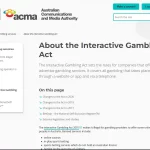
The Australian Communications and Media Authority, or ACMA, is the federal regulator responsible for enforcing the Interactive Gambling Act 2001 and overseeing compliance with federal interactive gambling rules. It can ask Australian internet service providers to block websites that provide prohibited interactive gambling services or advertise them in Australia.
ACMA’s enforcement record also gives context to the word “offshore”. Following enforcement action, it has blocked more than 1,455 illegal gambling and affiliate websites since November 2019. Reports also differ on how many illegal services have withdrawn from the Australian market since ACMA began enforcing the rules in 2017: one figure says more than 210, while another says over 190. Either way, withdrawal and blocking are part of an active enforcement environment, not evidence that a site is approved because it remains accessible.
This is where I would slow down if a page leans heavily on an overseas licence while presenting itself as an easy option for Australians. Ask what the licence actually covers and who issued it. Then keep that answer separate from the question of whether the operator may offer online casino games to people in Australia. A credible foreign regulator does not turn a prohibited service into a locally licensed one.
iPad Casinos in Australia: Games and Access
A VPN is not a licensing workaround. It cannot grant an operator Australian approval, validate a licence number, or make the operator’s conduct trustworthy. The legal framework is aimed at operators; the Act does not explicitly criminalise Australian citizens for playing on offshore sites. That is not the same as saying access is endorsed or risk-free, and it does not make an offshore casino a lawful local service.
This page is affiliate-based and includes sponsored links. I would not read a link, ranking or promotional label as proof of licensing. Check the regulator’s records independently, and remember what that check can establish: whether a foreign licence appears genuine and current, not whether the site is authorised to offer online casino games in Australia.
That is the line I keep coming back to. A VPN label describes a connection claim. A licence check describes a regulator’s claim. Neither replaces the Australian legal position. A badge is not permission.
VPN-Friendly Casino Claims in 2026: What They Actually Tell You
If you’re looking for a casino to access with a VPN in Australia, treat this list as a starting point and check the operator’s own terms and local requirements before signing up. The details below are limited to the information available for each operator.
1. Vegaz Casino
License: Curacao OGL/2024/1335/0780 · Min. deposit: EUR 20 Vegaz Casino lists a Curaçao licence, OGL/2024/1335/0780, and a minimum deposit of EUR 20. These details give you a couple of concrete points to check when considering the casino.
2. SpinsUp
License: Curacao Gaming Control Board OGL/2023/174/0082 (Dama N.V.) SpinsUp is listed with a Curaçao Gaming Control Board licence, OGL/2023/174/0082, under Dama N.V. The available information identifies its licensing details but does not specify a deposit minimum.
3. Uptown Pokies
License: Curacao (operating since 2017) · Min. deposit: A$20 Uptown Pokies is described as operating since 2017 under a Curaçao licence, with a minimum deposit of A$20. You can use those details as a starting point when assessing whether it suits you.
4. Playfina Casino
License: Curacao eGaming (Hollycorn N.V., since 2017) · Min. deposit: A$20-30 (depends on the offer) Playfina Casino is associated with Curaçao eGaming and Hollycorn N.V., and is listed as operating since 2017. Its minimum deposit is A$20–30, depending on the offer.
5. DragonSlots Casino
License: Curacao Gaming Authority (Jumpman Gaming Ltd) DragonSlots Casino is listed with a Curaçao Gaming Authority licence and Jumpman Gaming Ltd. The available details focus on its licensing; no deposit minimum is specified.
6. Kingmaker
Payout speed: crypto ~90 minutes, fiat 1-5 days · Min. deposit: A$30 Kingmaker lists a minimum deposit of A$30. Its stated payout timing is around 90 minutes for crypto and 1–5 days for fiat.
7. Thor Casino
License: Curacao – Antillephone N.V. (Versus Odds B.V.) · Min. deposit: EUR 20 Thor Casino is listed with a Curaçao licence from Antillephone N.V., associated with Versus Odds B.V. Its minimum deposit is EUR 20.
8. JeetCity Casino
License: Curacao eGaming (Dama N.V.) JeetCity Casino is listed with a Curaçao eGaming licence associated with Dama N.V. The available information does not specify a deposit minimum or other operational details.
9. Rollero Casino
License: Curacao Gaming Control Board OGL/2023/176/0095 (Hollycorn N.V.) Rollero Casino is listed with a Curaçao Gaming Control Board licence, OGL/2023/176/0095, under Hollycorn N.V. The available details identify its licensing information but do not state a deposit minimum.
10. Roby Casino
License: Curacao eGaming (Roby Games Ltd) Roby Casino is listed with a Curaçao eGaming licence associated with Roby Games Ltd. The available information is limited to these licensing details.
“VPN-friendly” sounds like a useful promise. I used to read it as shorthand for “I’ll be able to get in and play without trouble.” That is a much bigger claim than the words support. At most, the label suggests that a site may accept connections coming through a virtual private network. It says nothing dependable about what happens after you arrive.
That distinction matters in Australia. A site being reachable, or describing itself as welcoming VPN users, does not make offering online casino games to people here lawful. Nor does a successful connection establish that an offshore casino is safe. The label is about a possible connection policy, not a stamp of approval.
A narrow claim dressed up as a broad one
There is no universal standard for calling a casino VPN-friendly. One operator might use the phrase to suggest that VPN traffic is not automatically rejected. Another might use it loosely, without making a firm promise about access. Unless the operator explains what it means, you cannot tell from the label alone how it applies to your account or location.
There is no universal standard for the term "VPN-friendly"; it is often used as sales language rather than a regulatory category.
Even a clear statement that VPN connections are accepted has limits. A casino can still assess where a connection appears to originate, or apply its own location rules. Many operators rely on geolocation systems that can flag IP addresses associated with VPN services. So a connection that works at first may not remain available, and the label cannot promise that the site will treat every VPN connection alike.
I’d read “friendly” as a description of a possible technical arrangement, not a guarantee. Small wording difference. Big consequences.
The phrase also leaves out what matters if you are weighing risk: who runs the site, whether its conduct is trustworthy, and what recourse you would have if something went wrong. None of those questions is answered by a VPN claim. An encrypted connection does not turn an operator into a legitimate one, and an operator’s use of reassuring language does not verify its claims.
What the label cannot promise
It cannot promise access. A site may reject a VPN connection, or its systems may identify the address being used. Availability can also depend on the operator’s own restrictions. I would not treat a page saying “VPN-friendly” as proof that an account can be opened, that a game will load, or that access will continue.
Real Money Pokies in Australia: App or Website?
It cannot promise safety. The fact that a site accepts VPN traffic tells you nothing about whether it handles accounts responsibly or whether its claims are honest. The network-level block may be out of the way, but that does not remove the risks tied to an offshore casino. Access is not endorsement.
It cannot promise legality. For people in Australia, the Interactive Gambling Act 2001 prohibits operators from providing real-money online casino games to customers here. A VPN label does not change that rule or create an exemption. The law primarily targets operators; that does not make the operator’s offer lawful simply because a player can reach it.
And it cannot promise a successful payment or payout. “VPN-friendly” is not a payment policy. It does not tell you whether a transaction will be accepted, whether an account will face checks, or how a dispute would be handled. I’ve learned not to fill those gaps with optimism. A bold badge is still just a badge.
How I read the wording now
I separate the claim from the conclusion I might be tempted to draw from it. If the wording only says VPNs are accepted, I take it to mean just that the operator may allow such connections under some conditions. I do not turn it into “safe for Australians,” “legal here,” or “payments are assured.” Those are separate claims, and the VPN wording does not establish any of them.
Do
- Treat “VPN-friendly” as a narrow technical claim about connections
- Research the operator’s specific terms regarding location and VPNs
Don’t
- Assume a working connection means the site is safe or legal
- Interpret a “friendly” label as a guarantee of access or payments
I also look for whether the statement is specific enough to understand. A vague slogan can be repeated across a site without explaining its limits. Clear wording would still not prove that the operator is trustworthy or lawful, but it would at least show what the operator is claiming about connections. There is a difference between understanding a claim and relying on it.
The phrase “play in a casino with a VPN” can sound like a simple workaround. In practice, that framing bundles together separate questions: whether a connection is accepted, whether access is lawful, and whether the operator deserves trust. The label addresses, at best, the first one. It does not settle the others.
This page is affiliate-based and includes sponsored links. That disclosure is worth making plainly, especially beside casino-related claims: commercial links are not evidence that an operator is safe, legal, or suitable for Australians. When I see “VPN-friendly,” I now keep the meaning narrow and leave the advertising shine out of it. A connection claim, nothing more.
Crypto and No-KYC Claims Don’t Make the Risks Disappear
“Crypto-friendly” can sound like a simple payment feature: send cryptocurrency, play, and avoid the usual friction. “No-KYC” adds another promise—that you can use the site without identity checks. Put the phrases together and an offshore casino may look easier to access. But neither label changes the Australian rules on gambling payments.
Android Casino Apps in Australia: How Access Works
Cryptocurrency is not an allowed payment method for gambling in Australia. That matters even if a site accepts a digital currency, describes itself as VPN-friendly, or appears to load through your connection. A payment option offered by an offshore operator is not, by itself, permission to use that service from Australia. The label doesn’t change the rule.
I’ve learned to treat “no verification” as a claim to examine, not a reliable description of what will happen to your account. It does not establish what checks the operator may require, what information it may ask for later, or what conditions apply when you try to withdraw funds. Read the terms that apply to identity checks and payments before sharing information or sending anything. If those terms are vague, contradictory, or hard to find, that is a reason to pause—not proof that the process is harmless.
A VPN does not settle any of this. Even if a casino connection works, that says nothing about whether cryptocurrency gambling is allowed in Australia, whether the operator will honour its terms, or whether you can recover money after a dispute. “VPN-friendly” describes a possible connection policy; it cannot turn a payment method into a lawful one or make a no-verification promise dependable.
There is a practical tension in the pitch, too. A site may advertise minimal checks while still setting conditions that affect access to an account or a payment. Without clear, consistent terms, you cannot sensibly assume that an account will stay usable or that a withdrawal will be approved. A marketing slogan is not a substitute for a binding explanation of what the operator may require. Don’t let “no KYC” do that work in your head.
Attention: "No-KYC" and "crypto-friendly" labels do not override Australian rules on gambling payments or guarantee that withdrawals will be approved.
Nor should the privacy appeal distract from the payment issue. Sending cryptocurrency is not the same as making a reversible card payment; once you have authorised a transfer, you should not assume it can simply be undone. That is a general feature of how cryptocurrency transfers work, not a safeguard or endorsement of any gambling site. If a platform asks you to pay, the central question is not whether it accepts your chosen coin. It is whether using that service and payment method is allowed for someone in Australia.
I would not treat the combination of crypto, no identity checks and VPN access as a clever workaround. It stacks marketing claims on top of a prohibited payment method and leaves important questions unanswered. Stop before depositing; don’t mistake access for permission, or anonymity for protection.
This page is affiliate-based and includes sponsored links.
Can You Use a VPN to Play? Know What It Does—and Doesn’t—Do
Can you use a VPN to play at an online casino? Technically, a VPN server outside Australia can mask your Australian IP address and may get around DNS restrictions imposed by an internet provider. But that answers only whether the connection might reach a site. It says nothing about whether the operator may legally offer casino games to people in Australia, whether the site will accept your connection, or whether you can trust it.
Instant Withdrawal Casinos in Australia: What to Check
I used to treat “the page loaded” as a kind of green light. It isn’t. A VPN can change what your network provider can see and where your connection appears to come from. It cannot change the laws that apply to an operator offering real-money online casino games to people physically in Australia. Under the Interactive Gambling Act 2001, that offer is prohibited. The law primarily targets operators and does not explicitly criminalise Australian citizens for playing on offshore sites, but that is not legal protection supplied by a VPN.
That distinction matters. Getting past a network-level block is not the same as permission to use a service. And a connection that works at first can still be refused later: a casino may have its own location rules or identify VPN traffic. If access is blocked by the site’s terms, trying to get around that restriction can create account and withdrawal problems. I wouldn’t treat a changed IP address as a way to settle those risks.
Online Pokies E-Wallets in Australia: Payments Guide
So why use a VPN for online casinos? For someone considering an offshore casino from Australia, the practical answer may be to alter how a connection appears or to get around a network restriction. But “may” is doing a lot of work. A VPN does not guarantee access, make an operator safe or legal, or ensure a deposit or withdrawal will be handled. It is a connection tool, not a permission slip.
If you are wondering how to use a VPN to play, I’m not going to walk you through evading a casino’s location restrictions. The safer practical move is to read the site’s own terms and stop if they prohibit VPN use or service to people in your location. Don’t misstate where you live or assume that a different-looking IP settles the question. A connection can be masked; your obligations and the operator’s rules do not disappear with it.
Connection Tool
A VPN can bypass network restrictions, but it cannot provide legal protection or make an offshore casino legitimate.
The mistake I made was confusing “can connect” with “can rely on it.” Those are different things. If a site is inaccessible, the block itself is not evidence that a VPN makes access appropriate. And if you can reach it, that is not evidence that the gambling offer is lawful in Australia or that the operator will resolve a dispute in your favour.
My plain answer: a VPN might help a connection get past a network restriction, but it does not make playing risk-free, provide legal protection, or turn an offshore casino into a legitimate Australian service. If you’re weighing whether to proceed, don’t base that decision on whether the site opens.
This page is affiliate-based and includes sponsored links. Affiliate relationships do not change what a VPN can or cannot do.
Bitcoin-Compatible Casino Searches: Check the Australian Payment Rules First
A casino can advertise Bitcoin as a deposit option and still be the wrong place for an Australian player. “Bitcoin-compatible” describes a payment method, not whether the gambling service can legally be offered here. Cryptocurrency is not an allowed payment method for gambling in Australia, so seeing a Bitcoin symbol beside a cashier button does not make the arrangement acceptable.
I used to treat a payment badge as a useful shortcut: if the site supported the coin I held, I assumed the practical part was sorted. It wasn’t. A payment option tells you what a site says it will process; it does not change the rules that apply to online casino gambling in Australia. VPN wording does not alter that either. A connection that works is not permission to use a payment method that is not allowed for gambling here.
Pokies Open Near Me: Australian Casino Hours
That distinction matters when a site combines Bitcoin with language about VPN access. “Compatible” can sound reassuring, but it answers a narrow technical question: whether the operator claims to accept a particular kind of payment. It says nothing by itself about whether Australians may use that service, whether a transaction will go through, or what happens if a payment or account is disputed. A VPN cannot turn a payment claim into a lawful one.
I would also be wary of treating a familiar casino name in a Bitcoin or VPN context as proof of a current policy. Search results and third-party pages can repeat old claims, while a site’s own payment wording may change. Even a clear statement from an operator is not a substitute for the Australian rule: cryptocurrency gambling is not allowed here. Don’t send funds first and hope the details sort themselves out later.
If you are checking a payment page, read what it actually says rather than relying on a logo or a headline. But don’t mistake that check for a way around the restriction. The relevant point is not whether a wallet can connect or whether a VPN can reach a page; it is that crypto is not an allowed gambling payment method in Australia.
I’ve learned to separate “can pay” from “should use.” They are not the same thing. This content is affiliate-based and includes sponsored links; that relationship does not change the payment rule or make a casino claim an endorsement.
Cryptocurrency is not an allowed payment method for gambling in Australia, regardless of a site’s Bitcoin compatibility or VPN access.
A “Casino VPN” Is a Connection Tool, Not a Casino Safeguard
A VPN and a casino’s own safeguards do different jobs. The VPN encrypts the connection between your device and its server. That changes what your internet provider can see: it sees encrypted traffic travelling to the VPN server, rather than a direct request to a casino’s domain. It does not inspect the casino’s ownership, verify its claims or make its handling of money trustworthy.
I used to treat the little padlock-and-privacy language around VPNs as if it settled more than it did. It doesn’t. Encryption can protect the connection from being read in transit; it can’t tell you whether a gambling site will honour its terms, protect your account or handle a dispute fairly. Different problem.
That distinction matters in Australia. A VPN may get around a block applied at the network level, but a page loading is only evidence that the connection worked. It is not evidence that the casino is safe or operating legally. The Interactive Gambling Act 2001 bars operators from providing real-money online casino games to people in Australia. Changing the route your traffic takes does not change where you are or turn the operator’s conduct into something legitimate.
Nor does a VPN replace the protections that should exist on a trustworthy service. It cannot confirm who is behind a site or guarantee that your funds will be paid out. If an operator offers its own account security or dispute process, those are separate matters to assess; a VPN does not strengthen them simply by being switched on.
Online Pokies Australia: Real Money, No Deposit
So when you see “casino VPN” presented as a safety feature, read the words carefully. It may describe a tool for encrypting a connection, or a site’s claim about accepting VPN traffic. Neither says anything conclusive about the casino itself. A working connection is not a character reference.
I’ve learned not to confuse privacy with protection. A VPN can hide the destination from your internet provider, but it cannot do the checking for you—and it does not remove the legal boundary around online casino services in Australia. Connection tool, nothing more.
Does a Casino Allow VPN Connections? Check Its Terms, Not the Slogan
“VPN-friendly” sounds like a clear promise. It isn’t. It may describe a marketing claim, a connection the site happens to accept, or a policy that comes with conditions. None of those tells you, by itself, whether you’re permitted to use a VPN while gambling.
When I’m checking a site’s rules, I look for direct wording in its current terms: whether VPNs or proxy connections are restricted, whether location must be accurate, and what the operator says it can do if it believes a connection hides your location. A vague slogan on a landing page is no substitute. If the terms are unclear, I wouldn’t treat silence as permission.
That matters because a connection can work at first and still be rejected later. Many casinos use IP geolocation services that can recognise known VPN server addresses. A site may also apply its own location checks. So “it opened for me” is not the same as “the operator allows this”. A small distinction, with consequences.
Using a VPN to evade a casino’s own geographic restrictions can lead to account disputes or refused withdrawals.
Don’t use a VPN to get around a casino’s geographic restrictions. If the operator says access from your location is not allowed, changing how your connection appears does not change that rule. It can leave you dealing with an account or withdrawal dispute, and it does not make the underlying gambling lawful in Australia. The Interactive Gambling Act 2001 prohibits operators from providing online casino games to people in Australia.
I’ve learned not to read an accepted connection as approval. Check the terms that apply to your location and account, and contact the operator if the wording leaves room for doubt. If the answer is evasive, that’s useful information too.
This page is affiliate-based and includes sponsored links. That does not make a broad “VPN-friendly” claim proof that a site’s policy permits your use.
Searching for a Shuffle Casino VPN Policy? Don’t Assume One
A VPN can change what happens between your device and a blocked site, but that says nothing about the gambling service on the other end. Seeing Shuffle load while you are connected through a VPN is not proof that the operator permits that connection, or that playing there is safe or legal.
Australian Pokies Parlours: Venues and Online Claims
I’ve made the mistake of treating a page that opens as a green light. It isn’t. A network-level block may no longer stop the connection, yet the VPN does not change the legal status of online casino games offered to people in Australia. Nor does it guarantee that an operator will honour a deposit or withdrawal. Access is just access.
The brand name in a search or a working link can make the question feel specific: does Shuffle accept VPN connections? But a connection working once is not a dependable answer about the site’s policy. A VPN does not turn a gamble into a protected transaction, and it cannot make an offshore casino legitimate.
That distinction matters more than the connection itself. If a site’s rules restrict VPN use or access from Australia, trying to get around those limits can create problems with the account. Don’t treat the VPN icon or a successful page load as permission to play.
I’d keep the conclusion plain: a VPN may get past a network block, but it cannot make gambling at an offshore casino safe or lawful. No shortcut there.
VPN Slots and Changing Access: Why a Working Connection Can Still Fail
A page loading is not the same as being allowed to play. That distinction matters when you’re looking for online slots: a VPN may change the IP address a site sees, but it does not make that address look like an ordinary household connection.
Australian Mobile Casinos: Access, Payments and Checks
Many casinos use IP geolocation services that can recognise known VPN server addresses. So a site might load and still refuse access, ask for additional checks, or restrict an account under its terms. Detection can happen after the first page appears. The connection working at that moment proves very little.
I used to treat a successful load as a green light. It isn’t. A casino can apply its own location checks, and those checks are separate from whether your internet provider can resolve the site’s domain. Trying to change servers to get around a restriction can create more trouble with the site’s rules; I wouldn’t treat it as a reliable fix.
There’s a larger point for Australian readers, too. The Interactive Gambling Act 2001 prohibits operators from offering real-money online casino games to people in Australia. A VPN does not change where you are physically located or turn a prohibited service into an authorised one. The technical route and the legal position are different things.
If a slot page fails to load, or loads but blocks play, don’t assume another connection will solve it safely. “Works with a VPN” is not a promise of continued access, permission under the site’s terms, or protection if something goes wrong. Just a connection.
Can I use a VPN to access offshore casinos?
Yes, a VPN may let you get around an ISP-level DNS block by routing your traffic through a VPN server and masking your Australian IP address. That does not make the casino legal or safe, and the site may still identify VPN traffic.
How long do Royal Reels mirrors last before blocking?
Casino mirrors typically last around 3–6 months before they are blocked.
What is ACMA?
ACMA is Australia’s federal communications regulator responsible for enforcing the Interactive Gambling Act and monitoring compliance with federal interactive gambling laws. It can ask ISPs to block sites offering prohibited gambling services or advertising them in Australia.
Which casino licence is best for Australian players?
No foreign licence authorises an online casino to offer casino games to people in Australia, and Australia does not issue online casino licences. Malta, Gibraltar, the Isle of Man and Alderney licences carry more weight than a Curaçao licence, but none replaces Australian authorisation.
Mobile Access
Australian Mobile Casinos: Access, Payments and Checks
A practical guide to browser access, account checks, payment methods and the conditions attached to...

Android Casino Apps in Australia: How Access Works
A practical guide to browser-based access, virtual-credit pokies, bonus terms, payment risks and common Android...

iPhone Casino Apps in Australia: What to Know
Australian-facing casino sites are often browser-based, so an iPhone label does not establish a native...

Best Casino Apps in Australia: Legal and Mobile Guide
The guide explains legal limits on offshore real-money play and the practical differences between browser...

Instant Withdrawal Casinos in Australia: What to Check
Mobile access, verification, bonus rules and payment methods all affect how quickly offshore casino withdrawals...

International Casinos for Australian Players: A Guide
Offshore casino sites are not Australian-licensed services, so payment terms, bonus rules, game limits and...

Offshore Casinos for Australian Players: How to Assess
A practical guide to mobile access, offshore licensing, bonus conditions and checking deposits and withdrawals...

Inclave Casinos in Australia: Rules and Search Claims
The Interactive Gambling Act 2001 focuses on supplying real-money online casino games to people in...

iPad Casinos in Australia: Games and Access
A practical look at game compatibility, free-play searches, apps and Safari, and the distinction between...

Online Pokies Australia: Real Money, No Deposit
A practical look at offshore operator rules, free-spin conditions, Aristocrat game verification and the difference...
Online Pokies E-Wallets in Australia: Payments Guide
See how e-wallet deposits and withdrawals fit into mobile play, alongside verification, casino credentials and...

Pokies Open Near Me: Australian Casino Hours
A venue’s round-the-clock status does not guarantee that every bar, restaurant or gaming area is...

Australian Pokies Parlours: Venues and Online Claims
A practical guide to what the term means in Australia and how to assess venue...

Real Money Pokies on Android in Australia
The guide separates browser play, PWAs and native casino apps, while covering free games, offshore...

Real Money Pokies in Australia: App or Website?
Many mobile casino options are browser sites or PWAs, so understanding the difference can help...