Australian Pokies Parlours: Venues and Online Claims
 Available in AU
A practical guide to what the term means in Australia and how to assess venue details, offers and online casino claims.
Table of Contents
- What “Pokies Parlour” Means in Australia
- The Australian Casino Map, Beyond the Big Cities
- Sign-Up Bonuses: What Australian Rules Actually Say
- Playing Online or Free? Check What the Site Really Is
- Free Chips and Spins: Don’t Mistake a Claim for a Real Offer
- How to Read a Pokies Parlour Review Without Taking the Hype Literally
- Bonus Claims and ACMA Enforcement: The Numbers to Know
- “VIP” Parlour Claims Need Proof
- Parlour Pokies and the Scale of Casino Machines
- Real-Money Online Casino Searches: A Domain Is Not a Licence
What “Pokies Parlour” Means in Australia
“Pokies parlour” sounds like the name of a particular kind of venue, but it is better read as an informal description than as the name of one Australian casino. In everyday use, it points towards a physical gaming venue where electronic gambling machines are part of the offering. The phrase can also be used loosely online, which is where things get muddy: a page calling itself a parlour does not, by that label alone, become a real Australian casino.
For this section, the grounded meaning is a place you can locate in Australia, not a branded online casino or a ranking of operators. I’ve learned not to let a confident label do the work of proof. A name on a page may sound local; a street address gives you something concrete to examine. It still does not tell you everything about the venue, but it anchors the description in the physical world.
Three examples show how far apart the settings can be. Lasseters Casino has its address on Barrett Drive in Alice Springs: 93 Barrett Drive, Alice Springs, NT 0870, Australia. On the Gold Coast, Jupiters Gold Coast Casino & Hotel is situated on Broadbeach Island. In Tasmania, Country Club Casino is associated with Country Club Avenue, Prospect, in the Meander Valley. These are different places, not three spellings or branches of one “pokies parlour” brand.
If you’re looking at online pokies options from Australia in 2026, it’s worth checking the details available for each operator before choosing where to play. This reference highlights the stated licensing and deposit or payout information where provided.
1. Vegaz Casino
License: Curacao OGL/2024/1335/0780 · Min. deposit: EUR 20 Vegaz Casino lists a Curaçao OGL license, number OGL/2024/1335/0780. Its stated minimum deposit is EUR 20.
2. SpinsUp
License: Curacao Gaming Control Board OGL/2023/174/0082 (Dama N.V.) SpinsUp lists a Curaçao Gaming Control Board license, OGL/2023/174/0082, held by Dama N.V.
3. Uptown Pokies
License: Curacao (operating since 2017) · Min. deposit: A$20 Uptown Pokies has operated since 2017 under a Curaçao license. Its stated minimum deposit is A$20.
4. Playfina Casino
License: Curacao eGaming (Hollycorn N.V., since 2017) · Min. deposit: A$20-30 (depends on the offer) Playfina Casino is listed under Curaçao eGaming, with Hollycorn N.V., and has operated since 2017. Its stated minimum deposit is A$20–30, depending on the offer.
5. DragonSlots Casino
License: Curacao Gaming Authority (Jumpman Gaming Ltd) DragonSlots Casino is listed under the Curaçao Gaming Authority, with Jumpman Gaming Ltd.
6. Kingmaker
Payout speed: crypto ~90 minutes, fiat 1-5 days · Min. deposit: A$30 Kingmaker lists crypto payouts at around 90 minutes and fiat payouts at 1–5 days. Its stated minimum deposit is A$30.
7. Thor Casino
License: Curacao – Antillephone N.V. (Versus Odds B.V.) · Min. deposit: EUR 20 Thor Casino lists a Curaçao license held by Antillephone N.V., with Versus Odds B.V. Its stated minimum deposit is EUR 20.
8. JeetCity Casino
License: Curacao eGaming (Dama N.V.) JeetCity Casino is listed under Curaçao eGaming, with Dama N.V.
9. Rollero Casino
License: Curacao Gaming Control Board OGL/2023/176/0095 (Hollycorn N.V.) Rollero Casino lists a Curaçao Gaming Control Board license, OGL/2023/176/0095, held by Hollycorn N.V.
10. Roby Casino
License: Curacao eGaming (Roby Games Ltd) Roby Casino is listed under Curaçao eGaming, with Roby Games Ltd.
That distinction matters because the phrase can make a reader picture a small, standalone room devoted only to machines. The examples above are casino properties identified by their own venue names and locations. “Parlour” may be a convenient conversational shorthand, but it is not enough to determine the kind of property, its facilities, or its entry conditions. I would treat it as a clue to what someone means, not as a precise classification.
If you are trying to work out whether a result refers to an actual venue, separate its wording from its identifying details. Is there a physical location? Does the name refer to a casino property? Is the address specific enough to distinguish the venue from a web page using similar language? Those are more useful checks than taking “parlour” as a guarantee of what is inside. A polished description can still be vague. The address is the part you can pin down.
That is also why “pokies parlour casino” can sound more definite than it is. The words may be stacked together to describe a casino with gaming machines, but they do not identify one establishment by themselves. A reader could mean a casino in Alice Springs, a property on the Gold Coast, or a venue in Tasmania. Without a venue name or location, the phrase leaves the key detail unresolved.
Online Pokies E-Wallets in Australia: Payments Guide
Australian casinos are physical venues subject to local entry requirements. The minimum age for casino entry is 18 nationwide, and valid photo identification is required for entry to major Australian casinos. That is a practical difference from a page that merely claims to offer a casino-style experience: a physical venue has a place and an entry process. I would not assume that every result using the same vocabulary describes the same type of service.
I have made the mistake of trusting a familiar-sounding name too quickly. It is easy to see “casino” and “parlour” together and assume you have found a direct description of a local place. But the useful details are the ones that hold still: the venue’s name and its location. In the examples here, Barrett Drive points to Alice Springs, Broadbeach Island to the Gold Coast, and Country Club Avenue to the Meander Valley. The phrase alone does none of that work.
So when someone says “pokie parlour” in an Australian context, they may simply mean a physical gaming venue or casino. It is not a universal formal title, and it should not be mistaken for a particular online brand. I’d start with the place being described, then read the label in that light. That keeps a loose phrase from becoming a claim it cannot support.
Plain enough.
Lasseters Casino
Located on Barrett Drive in Alice Springs, NT 0870, Australia.
Jupiters Gold Coast Casino & Hotel
Situated on Broadbeach Island on the Gold Coast.
Country Club Casino
Associated with Country Club Avenue, Prospect, in the Meander Valley, Tasmania.
The Australian Casino Map, Beyond the Big Cities
Australia’s gambling map is broader than a handful of capital-city venues. A specialist gambling-directory review counts gambling facilities across 147 cities, while its separate count of full-scale casinos puts the total above 20, spread across all eight states. Those figures describe that review’s snapshot, not a permanent national register: venues open, close and change status, and “gambling facility” is not another way of saying “casino”.
That distinction matters when you look beyond the main cities. A directory may group different kinds of venues under a wide gambling label, then count full-scale casinos separately. The first number gives a sense of geographic reach; the second concerns a narrower category. I used to read a large total as if every entry meant the same thing. It doesn’t.
The same specialist review identifies Sydney, in New South Wales, as the country’s largest gambling city, listing 11 gambling facilities there. It is a useful marker of concentration, but not proof that every city’s count is compiled on identical terms or that the ranking will stay fixed. Treat it as a dated listing, rather than a timeless league table.
The Northern Territory shows why a national overview should not stop at the major capitals. The review lists three casinos across three Territory cities. Its count also identifies Alice Springs as the Territory city with the most casinos: one. That can sound like a contradiction until you separate “most” from “many”: in a city-by-city comparison, one can be the highest count even when the number is modest.
The geographic point is more useful than the ranking. Casino venues are not confined to the largest coastal centres, and the national footprint includes places that a capital-city-only view would miss. Alice Springs is a clear example of a regional location appearing in the casino landscape, not just in a list of destinations far from the main metropolitan hubs.
Pokies Open Near Me: Australian Casino Hours
Still, a map can flatten important differences. State and territory governments regulate casino properties within their jurisdictions, so a national count does not mean the venues share one licence or one local framework. Nor does the presence of gambling facilities in many cities mean that each place has a casino. Those categories should not be blended just to make the map look busier.
When I compare counts, I now check what is being counted before drawing a conclusion. A total for gambling cities is not a casino total; a count of facilities is not a count of full-scale casinos. And a directory snapshot is a starting point, not a guarantee that every entry remains current.
That’s the map in broad strokes: a substantial spread, a clear concentration in Sydney in one specialist review, and a Northern Territory presence that reaches Alice Springs. For exact venue locations, the relevant property listing is more useful than a national tally. Big country. Different counts.
Sign-Up Bonuses: What Australian Rules Actually Say
A sign-up bonus can sound like a small, harmless starting point: create an account, receive a credit, and see what happens. I’ve learned to look past the friendly wording. For an online casino offer aimed at people in Australia, the key issue is not whether a deposit is required. It is whether the service behind the offer is allowed to provide online casino gambling here.
Legal Restriction
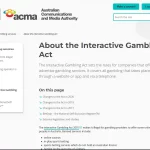
The Interactive Gambling Act 2001 makes it illegal for operators to provide real-money online casino games to people in Australia.
The Interactive Gambling Act 2001 makes it illegal for operators to provide real-money online casino games to people in Australia. That includes online slots and table games, not just a service labelled a “casino”. A welcome credit or a no-deposit offer does not change the nature of the gambling service. Calling it a bonus is a marketing description, not a separate permission under the law.
That distinction matters when the offer is framed as a way to try a site without paying first. “No deposit” describes one condition of an offer; it does not tell you whether the underlying service may legally be supplied to Australians. Nor does a sign-up page, an account prompt or polished promotional wording establish that the operator is authorised to provide online casino gambling here.
I used to read bonus terms as if the main question were how much I had to do before an offer became useful. That was the wrong starting point. The more basic question is whether the service itself falls within the restrictions on online casino gambling. If it does, removing the deposit requirement does not make the service lawful.
ACMA’s role is federal. The Australian Communications and Media Authority administers enforcement of the Interactive Gambling Act and monitors whether providers are complying with federal interactive gambling rules. It is not simply a body that checks advertising language after the fact; its responsibilities include responding to prohibited online gambling services and their promotion in Australia.
Android Casino Apps in Australia: How Access Works
One of the tools available to ACMA is asking Australian internet service providers to block websites that provide prohibited interactive gambling services or advertise them to people in Australia. That power puts a bonus promotion in context: an offer can be part of the activity that draws people towards a prohibited service, rather than proof that the service is acceptable. A banner or registration page is not a regulator’s approval.
I would not treat the absence of a deposit as a loophole. The law’s concern is the provision of online casino gambling to people physically in Australia, not only the moment money is transferred. An offer attached to an online casino still needs to be understood in relation to that underlying service. “Free” is doing a lot of work there.
It is also worth separating the regulator’s function from the operator’s sales language. A site may describe an offer as exclusive, risk-free or available to new members, but those phrases do not decide whether the service can legally be provided. ACMA’s remit comes from federal law, not from a website’s terms or its choice of words. Marketing can make an offer feel like a routine welcome gift. It cannot rewrite the rules.
I’m not suggesting that every page mentioning a bonus tells the whole story, or that a promotional label alone answers every legal question. The practical point is narrower: a bonus does not establish that an online casino service is lawful in Australia. For sign-up and no-deposit claims, the relevant framework is the prohibition on operators providing real-money online casino games here, alongside ACMA’s responsibility for monitoring compliance and its ability to seek website blocks.
Do
- Check if the service is legally allowed in Australia
- Understand ACMA’s role in federal enforcement
- Verify the underlying service’s legality
Don’t
- Treat a “no deposit” offer as proof of legality
- Assume a sign-up page establishes authorization
- Mistake a marketing bonus for a legal license
That is the part I wish I had checked before getting drawn into the promise of a “free” start. A welcome offer is not a licence, and a low-friction sign-up is not evidence of regulatory approval. The legal question sits underneath the promotion, whether the offer asks for a deposit or not. Plain enough.
Playing Online or Free? Check What the Site Really Is
A page loading on your phone can feel like proof that the service is open to Australians. I used to make that leap myself: if the site appeared, and an account screen worked, I assumed the operator must have cleared some local hurdle. That conclusion does not follow. A working page, account traffic or a different web address does not establish that a site is an Australian-licensed online casino.
The legal distinction is more important than the website’s appearance. Under the Interactive Gambling Act 2001, operators cannot provide real-money online casino games to people in Australia. That includes casino-style games such as slots, poker and table games. A foreign licence, polished design or familiar “parlour” label does not turn such a service into an Australian-licensed online casino.
A name can muddy the picture. “Pokies parlour” might bring to mind a physical venue, while a website using similar language may look like the same thing transferred to a screen. They are not interchangeable. A venue with a real address is a physical place; a site offering online casino-style play is a different service, subject to a different legal position. The branding does not settle that question.
Australian Mobile Casinos: Access, Payments and Checks
Nor does being able to create an account. Account pages are part of a website’s interface, not a ruling by an Australian regulator. The same goes for a page that accepts details or appears to respond normally. Those details show what the site lets a visitor do; they do not prove the operator has permission to provide the service in Australia.
The word “free” can blur things further. It may describe a label on a page, a demo-style feature, or a claim attached to an account. None of those descriptions, by itself, confirms who operates the site or whether it is permitted to provide the service. I would not treat a free-play label as a legal seal. It is only a claim about how a page presents itself.
Domain changes are another trap. A specialist review has reported that website blocking can affect which addresses resolve through Australian internet providers, and that alternate addresses can emerge over time. So a site that fails to load at one address might appear under another. That technical change says nothing, by itself, about the operator’s legal status. A new address is not a new licence.
This is where I learned to stop using access as my test. “It opened for me” describes a connection, not a regulatory decision. “I could reach an account page” describes a feature, not permission to offer online casino games to Australians. Even an address that has been shared widely cannot answer the legal question just because it works at the moment.
Technical access to a website, such as a working account page or an alternate domain, does not constitute regulatory approval or a legal license to operate in Australia.
If you are trying to understand what a site really is, separate three things: its wording, its technical availability and its legal status. They can look connected on a screen, but they are not the same. A site can call itself a parlour, remain reachable through an alternate domain, and still not be an Australian-licensed online casino. The name is branding. The connection is technical. Neither is a licence.
That distinction matters whether the page talks about online play or uses “free” to make the offer sound harmless. Don’t let a working link do the thinking for you. Access is not approval.
Free Chips and Spins: Don’t Mistake a Claim for a Real Offer
“Free spins” and “free chips” sound like a harmless extra. I’ve clicked on enough of that language to know the label can do more work than the offer itself. A headline is not proof that a promotion is genuine, available to you, or connected to a physical Australian casino.
The distinction matters because a casino website and a casino venue are not the same thing. A page using “parlour” in its name may look local, but that word alone tells you nothing about whether it represents a venue you can visit. Nor does a promotional banner turn an online service into a brick-and-mortar casino. Keep the claim separate from the place.
There is one straightforward detail about major Australian casinos: they operate around the clock. That describes venue opening hours, not a promise of complimentary play at any hour. It also does not mean a website advertising chips or spins is part of one of those venues. Easy to mix up. Easy to regret.
iPhone Casino Apps in Australia: What to Know
I used to treat “free” as if it meant there was nothing to lose. That was the mistake. The word can draw your attention away from what the page is actually offering, who is behind it, and whether the promotion is even real. A picture of a machine or a casino floor is not evidence of a connection to an Australian venue; neither is a polished design or a familiar-sounding name.
So when a page claims to offer complimentary chips or spins, read the claim as just that: a claim. Don’t infer that a physical casino is making the offer, and don’t assume the phrase “casino free” means you have found a free activity at a local venue. Promotional wording can blur the line between online entertainment and a real place. It doesn’t erase it.
That’s the part I now check first: is this about an actual venue, or is it an online page using casino language? If the page is vague about that, the freebie headline has not answered the useful question. And if the offer sounds generous but the details are hard to pin down, I don’t fill in the gaps for it.
No magic wording. No free lunch.
How to Read a Pokies Parlour Review Without Taking the Hype Literally
A review can sound confident and still leave out the one thing you need to know: what the site’s status means for someone in Australia. I used to give polished screenshots and a working sign-in page too much credit. They show that a website is operating in some way; they do not establish that it is an Australian-licensed online casino.
Mobile Casino Access in Australia: Apps & Pokies
That distinction matters when a review calls a site “trusted”, “available” or “back online”. Those are promotional descriptions, not proof of local approval. An account page accepting traffic does not settle the question either. Nor does a new web address. A domain can change while the underlying claim stays exactly the same.
I now read a review by separating its observations from its conclusions. Does it merely say that a page loaded, or does it imply that this makes the service legitimate for Australians? Those are different statements. A review that moves from one to the other without evidence is asking you to fill in the gap yourself.
“Alternative address” sounds practical. In reality, it tells you where someone says the site can be reached, not whether it has Australian authorisation. The same goes for comments about registration, account access or a familiar-looking page. Access is not a licence. Simple point.
There is also relevant enforcement context. ACMA, Australia’s communications and media regulator, has taken website-blocking action against illegal gambling services. The regulator’s enforcement record includes action involving alternate domains associated with Fair Go. That makes claims about a site returning under another address worth treating carefully: a changed address does not, by itself, answer questions about the service’s status.
Blocking can affect whether a domain resolves through an Australian internet provider, and addresses may change over time. That is why a review written around a particular link can become outdated, or describe access without explaining what it proves. I would not treat a link that works today as confirmation of approval, and I would not take a different link as evidence that the situation has been fixed.
VPN-Friendly Casinos in Australia: What to Check
The same caution applies to review language that blurs “people can access it” with “Australians can use it legitimately”. A page may be reachable, and a reviewer may describe what they saw, without either fact establishing local licensing. Look for a clear distinction between technical access and regulatory status, rather than relying on confident wording.
When I read a parlour review now, I look for what it actually demonstrates and what it leaves as an assumption. If the main evidence is a live domain, a login screen or a claim that an address has changed, I treat the verdict as unsupported. That is not a verdict on every detail the reviewer reports; it is a limit on what those details can prove.
The useful review is the one that keeps those claims separate. The hype begins when access is dressed up as approval.
Bonus Claims and ACMA Enforcement: The Numbers to Know
A bonus claim can look polished and still tell you very little about who is behind it. I used to read a confident banner as a sign that someone had checked the business. That was a bad shortcut. Enforcement figures give a more useful backdrop: they show that illegal gambling services and the sites promoting them have been part of ACMA’s work for years.
Since November 2019, the Australian Communications and Media Authority has blocked more than 1,455 websites connected with illegal gambling or affiliate promotion, following enforcement action. That is a count of websites, not a count of bonus offers, operators or customers. It also does not mean every blocked address belonged to a service using the same name. A number on its own is easy to overread.
Enforcement Facts
- ACMA has blocked over 1,455 websites connected with illegal gambling or affiliate promotion since November 2019
- Between 190 and 210 illegal services have withdrawn from the Australian market since 2017
- A site’s continued presence or a polished bonus banner is not evidence of regulatory approval
There is a second figure about services leaving the Australian market, and the published accounts do not agree. One says more than 210 illegal services had withdrawn since ACMA began enforcing the rules in 2017; another gives the figure as more than 190. Those versions should not be collapsed into one neat total. The clear point is that withdrawals have occurred, while the precise cumulative count is disputed.
That distinction matters when a site promotes a “pokies parlour bonus” or uses similar language to suggest an established local venue or recognised service. The wording is marketing, not proof of status. ACMA’s blocking record is a reminder that gambling and affiliate websites can be subject to enforcement, even when their pages are designed to look familiar or reassuring.
I would not use a bonus banner, an alternate address or a polished review as a substitute for checking what the claim actually establishes. Nor would I treat a website’s continued presence as evidence that it has passed an Australian regulatory test. Blocking action can change what addresses are available through local internet providers, and domains can shift. That makes snapshots and bold claims especially poor evidence.
The figures are useful as context, not as a scorecard for any individual offer. They do not identify a particular parlour promotion as genuine, or certify a site because it is absent from a blocking count. I’ve learned to separate a promotional promise from something that can be independently established. Less exciting. More sensible.
Best Casino Apps in Australia: Legal and Mobile Guide
“VIP” Parlour Claims Need Proof
“VIP” sounds like a shortcut to special treatment. In practice, it is just a label until a venue spells out what it means and backs the claim with clear terms. I would not take a polished page or a friendly-sounding invitation as proof of a particular programme, its benefits or who can access it.
That distinction matters because a claim about VIP status can blur two separate things: a venue’s own arrangements and the rules for entering a casino. A promise of priority, exclusive access or extra perks does not change the basic entry requirement. Casino entry in Australia is restricted to people aged 18 or over, and major casinos require valid photo identification. Bring ID; don’t assume a status claim replaces it.
I’ve learned to slow down when a pitch leans hard on words like “exclusive”. That may describe a marketing angle, not a confirmed entitlement. Look for the actual conditions: who the offer applies to, what access it covers, and whether the venue itself states those details. If the wording stays vague, treat the benefit as unproven rather than filling in the blanks yourself.
There is also a difference between a casino’s membership language and a general promise attached to a “parlour” label. The label alone does not establish that a VIP programme exists, or that a particular person qualifies. No magic pass.
Physical Casino Entry
- Confirm the specific venue’s entry requirements
- Ensure you are aged 18 or over
- Prepare a valid photo ID for identification
If you are considering a physical casino visit, keep the practical check simple: confirm the venue’s entry requirements and take valid photo ID. You must be at least 18 to enter. Anything beyond that should be supported by specific terms from the venue, not inferred from a badge, a review headline or a sales claim. A VIP label is not evidence.
Parlour Pokies and the Scale of Casino Machines
“Parlour” can make the subject sound like a small room with a tidy, countable row of machines. The national figure gives a broader picture: Australian casinos have 3,308 gaming machines installed, with those machines endorsed on venue licences.
That is a count across the country’s casino venues, not a promise about what you will find at any one address. It does not tell you how many machines are in a particular room, how they are arranged, or whether a specific venue has changed its floor. I used to read a big total as if it said something about the experience waiting at a single venue. It doesn’t.
iPad Casinos in Australia: Games and Access
The licensing detail matters, too. The figure concerns machines installed in casinos and recognised on their venue licences. It is not a count of every gaming machine in Australia, and it should not be stretched into one. Nor does it describe machines in pubs, clubs or other gaming venues.
So if you mean casino-based pokies when you say “parlour,” the useful takeaway is scale, not a recommendation: the national casino count runs into the thousands, while the number at any particular venue is a separate question. A nationwide total cannot tell you which venue suits you, what its layout is like, or what your visit will cost.
I know how easy it is to let a large number stand in for a reason to go. It isn’t one. The count is simply a way to understand the size of the casino machine footprint across Australia. Keep it at that, and the figure stays useful instead of turning into an implied promise about choice, availability or value. A count is a count.
Real Money Pokies in Australia: App or Website?
Real-Money Online Casino Searches: A Domain Is Not a Licence
When I was trying to work out whether an online parlour was genuine, I used to treat a page that loaded as a reassuring sign. It wasn’t. A working website, an account page that accepts traffic, or a familiar name under a different web address tells you nothing by itself about Australian licensing.
That distinction matters when real money is involved. Under the Interactive Gambling Act 2001, operators cannot provide real-money online casino games to people in Australia. A site presenting itself as a local casino does not change that rule, and a domain that looks Australian does not prove that the service is authorised here.
Addresses can shift, too. A specialist review describes how website blocking may affect which domains resolve through Australian internet providers, while alternate addresses can appear over time. That is a description of changing access, not evidence that a replacement address has a different legal status. The old address failing and a new one loading are both weak clues.
Instant Withdrawal Casinos in Australia: What to Check
I’ve made the mistake of reading access as approval. It is tempting because a polished page and a functioning account can feel official. But neither verifies who is operating the service, where it is licensed, or whether it may legally offer online casino gambling to Australians. A domain is just an address.
So if you are weighing a real-money offer, don’t use availability as your test. Nor does a redirect, mirror, or alternate address settle the question. Those details can change without changing the underlying service. In Australia, the important distinction is not whether the page opens; it is whether the activity is lawful here. For online casino games, the law prohibits operators from supplying them to people physically in Australia.
That’s the part I wish I’d understood sooner. A live link proves only that the link works at that moment. It proves no licence, and no permission.
Mobile Access

Australian Mobile Casinos: Access, Payments and Checks
A practical guide to browser access, account checks, payment methods and the conditions attached to...

Android Casino Apps in Australia: How Access Works
A practical guide to browser-based access, virtual-credit pokies, bonus terms, payment risks and common Android...

iPhone Casino Apps in Australia: What to Know
Australian-facing casino sites are often browser-based, so an iPhone label does not establish a native...
Best Casino Apps in Australia: Legal and Mobile Guide
The guide explains legal limits on offshore real-money play and the practical differences between browser...

Instant Withdrawal Casinos in Australia: What to Check
Mobile access, verification, bonus rules and payment methods all affect how quickly offshore casino withdrawals...

International Casinos for Australian Players: A Guide
Offshore casino sites are not Australian-licensed services, so payment terms, bonus rules, game limits and...

Offshore Casinos for Australian Players: How to Assess
A practical guide to mobile access, offshore licensing, bonus conditions and checking deposits and withdrawals...

Inclave Casinos in Australia: Rules and Search Claims
The Interactive Gambling Act 2001 focuses on supplying real-money online casino games to people in...

iPad Casinos in Australia: Games and Access
A practical look at game compatibility, free-play searches, apps and Safari, and the distinction between...

Online Pokies Australia: Real Money, No Deposit
A practical look at offshore operator rules, free-spin conditions, Aristocrat game verification and the difference...

Online Pokies E-Wallets in Australia: Payments Guide
See how e-wallet deposits and withdrawals fit into mobile play, alongside verification, casino credentials and...

Pokies Open Near Me: Australian Casino Hours
A venue’s round-the-clock status does not guarantee that every bar, restaurant or gaming area is...

Real Money Pokies on Android in Australia
The guide separates browser play, PWAs and native casino apps, while covering free games, offshore...

Real Money Pokies in Australia: App or Website?
Many mobile casino options are browser sites or PWAs, so understanding the difference can help...

VPN-Friendly Casinos in Australia: What to Check
ACMA-related ISP blocks may stop a domain resolving, while a VPN does not confirm that...