Best Pokie Machine to Play in Australia? A Guide
 Available in AU
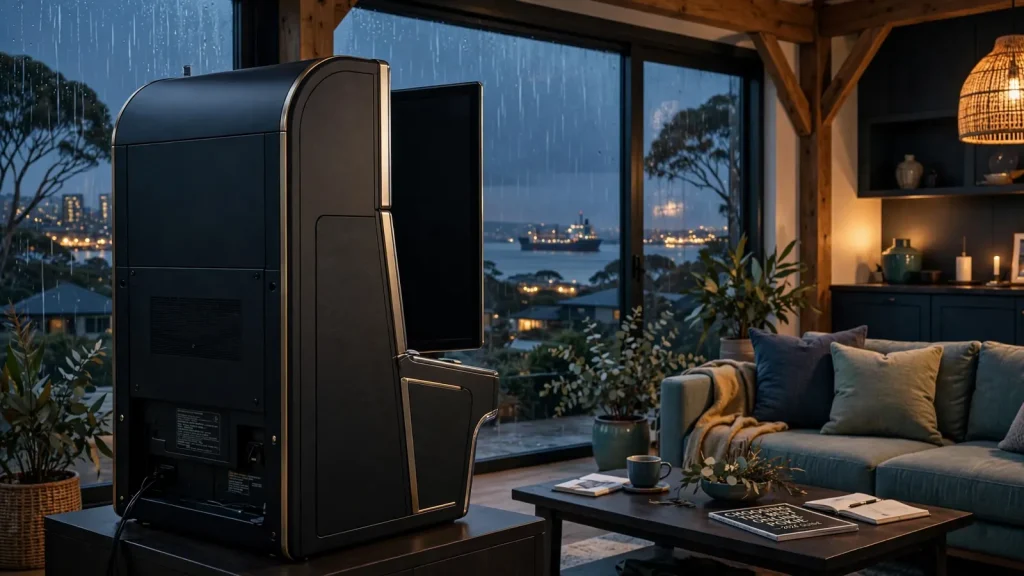
A practical look at game features, RTP and volatility alongside Australia’s rules for online play and the limits of free practice.
Table of Contents
- Online Pokies in Australia: What the Law Actually Says
- What Changes from One Pokie Machine to the Next
- Free Pokie Play: Useful Practice, Not a Promise
- Pokies at Australian Casinos, Including Crown Perth
- Pokie Games: Features, Paylines and Volatility
- Pokie Odds: What RTP Can—and Cannot—Tell You
- Real-Money Play, Bonuses and the Catch in the Fine Print
- Pokie Apps, Payments and the Withdrawal Wait
- New Pokie Features: Networked Jackpots and Feature Buys
- A Few Pokie Tips I Wish I’d Followed Earlier
Online Pokies in Australia: What the Law Actually Says
The legal line around online pokies in Australia is easy to muddle. The key distinction is between the business offering the game and the person who plays it. Under the Interactive Gambling Act 2001, an operator commits an offence by providing real-money online pokie games to people in Australia. The law does not make an Australian resident’s act of playing those games with an offshore operator an offence under that Act.
That distinction matters. It does not mean there is an Australian-licensed online casino market hiding somewhere, or that an offshore licence makes a service lawful here. No Australian licence is available for offering real-money online pokies to Australian residents. An overseas operator may describe itself as licensed elsewhere, but that does not grant it permission to provide these games to people in Australia.
The restrictions cover online casino-style gambling more broadly, not just pokies. Slots, poker, blackjack and roulette offered for real money to people in Australia fall within the prohibited interactive gambling services described by the law. So if you are looking for a real pokie machine game to play online for cash, the legal issue is with the operator making that service available here.
Choosing a pokie machine is only part of the decision: you should also consider the casino’s available information and payment details. Use these short profiles as a starting point when reviewing options for 2026.
1. Vegaz Casino
License: Curacao OGL/2024/1335/0780 · Min. deposit: EUR 20 Vegaz Casino lists a Curaçao OGL licence, number OGL/2024/1335/0780, and a minimum deposit of EUR 20. These details can help you assess whether its stated terms suit you.
2. SpinsUp
License: Curacao Gaming Control Board OGL/2023/174/0082 (Dama N.V.) SpinsUp lists a Curaçao Gaming Control Board OGL licence, number OGL/2023/174/0082, under Dama N.V. This gives you a specific licensing detail to consider when reviewing the casino.
3. Uptown Pokies
License: Curacao (operating since 2017) · Min. deposit: A$20 Uptown Pokies is described as operating under a Curaçao licence since 2017 and lists a minimum deposit of A$20. You can use those details as part of your initial assessment.
4. Playfina Casino
License: Curacao eGaming (Hollycorn N.V., since 2017) · Min. deposit: A$20-30 (depends on the offer) Playfina Casino is listed with a Curaçao eGaming licence under Hollycorn N.V. and has operated since 2017. Its minimum deposit is A$20–30, depending on the offer.
5. DragonSlots Casino
License: Curacao Gaming Authority (Jumpman Gaming Ltd) DragonSlots Casino lists a Curaçao Gaming Authority licence held by Jumpman Gaming Ltd. That licensing detail is the available point of reference for your review.
6. Kingmaker
Payout speed: crypto ~90 minutes, fiat 1-5 days · Min. deposit: A$30 Kingmaker lists a minimum deposit of A$30. Its stated payout speed is around 90 minutes for crypto and 1–5 days for fiat.
7. Thor Casino
License: Curacao – Antillephone N.V. (Versus Odds B.V.) · Min. deposit: EUR 20 Thor Casino lists a Curaçao licence associated with Antillephone N.V. and Versus Odds B.V., along with a minimum deposit of EUR 20. These are the stated details you can take into account.
8. JeetCity Casino
License: Curacao eGaming (Dama N.V.) JeetCity Casino lists a Curaçao eGaming licence under Dama N.V. This gives you a specific licensing detail to consider when assessing the casino.
9. Rollero Casino
License: Curacao Gaming Control Board OGL/2023/176/0095 (Hollycorn N.V.) Rollero Casino lists a Curaçao Gaming Control Board OGL licence, number OGL/2023/176/0095, under Hollycorn N.V. You can use this information as a reference when reviewing it.
10. Roby Casino
License: Curacao eGaming (Roby Games Ltd) Roby Casino lists a Curaçao eGaming licence under Roby Games Ltd. That is the available factual detail to guide your initial review.
I used to read “licensed” as if it answered every question. It doesn’t. The relevant point is whether the service is authorised to offer the game to Australians, and no Australian licence exists for that purpose.
Who enforces the rules?
The Australian Communications and Media Authority, usually shortened to ACMA, is the federal agency responsible for enforcing the Interactive Gambling Act and monitoring compliance with federal interactive gambling laws. Its work is not limited to issuing statements about the rules. It can ask Australian internet service providers to block access to websites that provide prohibited interactive gambling services or advertise them in Australia.
That helps explain why a site that appears in an online search may later be inaccessible. ACMA says enforcement actions have led to more than 1,455 illegal gambling and affiliate websites being blocked since November 2019. Blocking is a practical enforcement measure; it does not turn an offshore site into an Australian-regulated service, nor does it change the distinction between the operator’s offence and the player’s position under the Act.
There is a published disagreement in the figures for services that have left the Australian market since ACMA began enforcing the rules in 2017. One account puts the total at more than 210, while another gives a figure of over 190. Those are different reported counts, so it would be misleading to present one as if there were no discrepancy.
Mines Casino Game in Australia: Rules and Risks
The law also carries substantial potential penalties for operators. The maximum daily penalty is $360,000 for an individual and $1.8 million for a company. Those figures concern people or businesses breaching the Act; they are not fines that an Australian player faces simply for using an offshore online pokie service.
What this means if you are considering playing
Searching for an online pokie machine, an online simulator or software that imitates a machine can bring up very different things. Some pages may offer information or a no-wager demo; others may invite you to deposit and gamble for real money. The legal position described above concerns the real-money service being offered to Australians. A page’s appearance, branding or claim of an offshore licence does not establish that it has Australian approval.
It is also worth separating “available” from “lawful”. A website loading on your device does not prove that its operator is permitted to provide online pokie machine games to people here. ACMA’s ability to seek website blocking is one reason access can change. And if an offshore operator refuses to pay winnings or closes an account, the absence of an Australian online casino licensing framework means you should not assume you have local regulatory protection comparable to that offered in a locally licensed gambling market.
This is the part I wish I’d understood before treating a polished site as proof that everything was above board. A familiar-looking interface is not a regulator.
Legal Warning
Under the Interactive Gambling Act 2001, it is an offence for operators to provide real-money online pokie games to people in Australia.
If you are looking only to understand a game, a free online pokie machine or demo mode is different from depositing money to wager. Keep that distinction clear: a free-play screen is not the same thing as an authorised Australian real-money service. And the fact that a game displays its rules or pokie machine paylines does not change the legal status of a real-money service offered to Australians.
The short version is not that players are prosecuted for every offshore spin. Under the Interactive Gambling Act, the offence described here is the operator’s act of offering real-money online pokies to people in Australia; a resident who plays is not committing that offence. But the service itself remains prohibited, and an offshore label is no substitute for local authorisation. That’s the line.
What Changes from One Pokie Machine to the Next
A pokie can look familiar at a glance and still play quite differently from the one beside it. The useful comparison is not which title has the flashiest screen, but what its paytable says and how its paylines work. I used to skip the rules and go straight to the spin button. That made it harder to understand what I was actually choosing.
Start with the paytable
The paytable is the game’s explanation of what combinations pay and how those prizes are calculated. Take a moment to open it before playing. Check which symbols appear in the listed combinations, whether the payout depends on where they land, and whether the display explains prizes in credits, coins or another unit. If the table is unclear, that is a good reason to pause rather than guess.
Two pokie machines can use similar-looking symbols but have different prize tables. A familiar title or theme does not tell you what a particular version pays. The paytable is the practical reference for that machine, not the artwork or the name on its screen.
I have made the mistake of treating the rules page as decoration. It is not. A quick read can show whether the game’s prize structure makes sense to you before you commit to playing.
Understand the paylines
Paylines are the routes across the reels that determine which symbol combinations count. A machine may have fixed paylines, variable paylines, or a different number of lines from another game. That difference matters because the rules for a winning combination depend on the lines in play.
With fixed lines, the game sets which paylines are active. With variable lines, the player may be able to choose how many to use, according to that machine’s rules. Don’t assume that selecting fewer lines is simply a way to make the same game cheaper: the line settings can affect which combinations are eligible for a prize. Read the instructions on the specific machine.
The screen can make paylines hard to follow when several lines cross or use different colours. Look for a diagram in the help menu and trace a line from reel to reel. If you cannot tell which positions count, don’t rely on a hunch. A winning-looking pattern is not necessarily a payable combination unless it matches the game’s rules.
Do
- Open the paytable before playing
- Check the line settings
- Use the help menu to trace paylines
Don’t
- Skip the rules page
- Rely on a hunch for winning patterns
- Trust labels like “player favourite”
Compare the rules, not the reputation
When I compare one pokie machine with another, I look at the paytable and line settings before deciding whether I like the game. I also check whether the interface makes those details easy to find. That is a more grounded way to choose than trusting a label such as “popular” or “player favourite”—nice words, but they do not explain the rules.
A machine with many lines is not automatically a better choice, and a simpler-looking one is not automatically easier to understand. The right fit depends on whether you can follow how the game counts combinations and whether its prize table is clear to you. That’s the useful test.
If you are looking for the best pokie machine, there is no single answer in the title alone. One game may suit someone who enjoys studying its layout; another may feel needlessly busy. For a pokie machine in Australia, the same basic habit applies wherever you encounter a game: check the actual rules displayed for that version instead of assuming every machine with the same theme works identically.
“Best” is personal. The paytable and paylines are concrete. When I stopped choosing on appearance alone, I at least knew what the machine was asking me to play.
Free Pokie Play: Useful Practice, Not a Promise
A free demo can be a low-pressure way to see how a pokie works before deciding whether you even like it. You can watch the reels, try the controls and learn what the game asks you to do without staking money. That is useful practice. It is not a preview of what you will win later.
I used to treat a good run in demo mode as a kind of hint. It wasn’t. A pokie’s software uses a random number generator to determine results, and every spin is a fresh event; the result before it does not steer the next one. A string of wins in a free session tells you nothing dependable about what a later session will do. Nor does a dry patch mean the game is “due”. The demo is for learning the interface, not reading the future.
What a demo can teach you
The most practical benefit is familiarity. You can find out where the spin button is, how to change the stake setting, and what appears when a feature activates. Some games explain their symbols and bonus rules in a help panel. Reading that before you play can save you from staring at an animation and wondering what just happened.
A free session can also help you decide whether the pace and presentation suit you. Maybe the reels move too slowly for your taste, the sounds get irritating, or the theme feels like a long advert for itself. Those are fair reasons to close the game. You do not need to put money in just because you have already spent time trying it.
Pay attention to what the game actually shows rather than relying on the title or artwork. If a feature description is unclear, open the information screen and look for its rules. Demo play is a chance to work through that calmly, without the pressure of a real stake attached. Still, understanding a feature does not make its outcome predictable.
Free play is a rehearsal, not a test
One trap is assuming that a demo uses a “practice” version of the game whose results can be carried over mentally to real-money play. They cannot. The free session may let you experience the same controls and visible features, but the outcomes you see are not evidence about the results of a later session. Demo results do not predict real-money results.
That distinction matters even when the demo feels convincing. A few spins can seem to reveal a pattern: a symbol appears often, a bonus feels close, or a feature seems to arrive after a certain sequence. I have caught myself building a story around exactly that. It was just a story. Past spins do not change what the next one can produce.
It is also worth noticing whether the demo lets you adjust settings or whether it begins with a set play mode. Treat those as interface details, not clues about how real play will behave. A simulated balance is not your money, and watching it rise or fall does not recreate the feeling of staking your own funds. That gap is bigger than it looks.
Keep the purpose narrow
If you want to play a pokie for free, set a simple purpose first: learn the buttons, check the rules, or see whether you enjoy the theme. Once you have done that, you have got what the demo can offer. More time in free play will not turn it into a reliable strategy.
People sometimes search for pokie machine strategies after a lucky demo session. I understand the impulse; I have looked for a system after a run that felt unusually generous. But a demo cannot identify a method for beating random outcomes. Use it to become less confused, not more confident.
And if you are looking at a physical pokie machine for sale, that is a separate question from trying a digital demo. A free play screen does not tell you what buying or owning a machine involves. Keep the two ideas apart.
Useful practice. Nothing more.
Pokies at Australian Casinos, Including Crown Perth
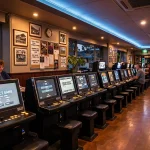
A pokie on a casino floor is a different proposition from an online game: you are playing at a physical venue, with the machine and its rules in front of you. In Perth, Crown Perth is the only legal land-based casino. Western Australia has no legal online casino market, so an offshore website should not be confused with a locally authorised casino.
Crown Perth has more than 2,500 gaming machines. That is a large floor to walk into, and I’ve found it easy to mistake a busy row or a flashy cabinet for a clue that one machine is the “best”. It isn’t. The look of a game, its sound and the pace of play tell you little about what it will pay. A popular Australian pokie machine is not automatically a better choice for your money.
Venue RTP
Most machines at Crown Perth fall within the 87% to 92% RTP range, though the exact setting for an individual cabinet is not published.
What to check on the floor
In Western Australia, every legal pokie must show its rules, paylines and prize table. Take a moment to read those before playing. They explain how the machine awards prizes and give you something concrete to compare, rather than relying on a cabinet’s lights or a nearby player’s apparent luck.
Crown Perth does not publish an RTP list for each individual machine. The available venue-level information puts most machines on its floor in the 87% to 92% RTP range, but that does not tell you the exact setting of the machine you are standing at. Nor does a published percentage predict what will happen during your visit.
That distinction matters if you are trying to compare pokie machine payouts. A general range is not a promise about a particular cabinet, and a machine that has just paid someone else has not become more likely to pay you next. I used to read too much into what was happening around me. Bad method.
If you are looking for the highest-paying pokie machine, there may not be a simple answer available from the venue’s public information. The rules and prize table are there to help you understand the game, but Crown Perth’s lack of a machine-by-machine RTP list makes it difficult to verify a specific machine’s RTP from a single published venue list. Don’t treat a confident claim from another player as a substitute.
A pokie machine simulator can help you get a feel for how a game works, but it cannot identify the machine that will pay best on the casino floor. The casino setting does not turn a run of results into a pattern, either. I’d rather check what the machine displays than trust a hunch formed while watching a row of screens.
The practical difference between a casino pokie machine and a game on a screen is the setting: at Crown Perth, you can inspect the machine’s displayed information and play at the venue. That does not make every choice a good one, and it does not make a visit a way to beat the machine. If you decide to play, set a loss limit before you start and stick to it. Once that money is gone, the lights are still just lights.
Crown Perth is useful context for anyone comparing Australian casino play with online claims: it is a physical casino, not evidence that real-money online pokies are legally available in Western Australia. Check the machine itself, keep your expectations modest and leave the idea of a guaranteed payout at the door.
Pokie Games: Features, Paylines and Volatility
A pokie can look familiar and still play very differently from the one beside it. The symbols, paylines and bonus features shape what happens on screen; volatility describes the broad pattern of its payouts. I used to treat flashing animations as a clue that something was about to happen. They weren’t. A feature can make a game more involved, but it doesn’t turn a spin into a promise.
Paylines are the routes a game uses to count matching symbols as a win. Depending on the pokie, those routes may run across the reels in set patterns or vary with the game’s format. It’s worth looking at the rules screen rather than assuming that matching symbols anywhere will count. A busy display can make the layout hard to follow. Take a moment with the paytable.
Features add another layer. A game might include wild symbols, scatter symbols or a bonus round, but the details vary by title. Read the game rules to see which symbols activate a feature and how its prizes are determined. The name of a feature can sound generous; its actual effect depends on the rules. “Exciting” is not a payout category.
Volatility is about the rhythm of wins, not a signal that a win is due. Low-volatility games tend to pay smaller amounts more often. High-volatility games pay less often, but can produce larger wins. That difference can change how a session feels: one format may offer more frequent small returns, while another can have longer quiet stretches and bigger outcomes when a payout lands.
I’ve learned not to confuse a quiet run with a game “warming up”. Each spin is its own event; the previous result doesn’t make the next one more likely to pay. A pokie’s volatility describes its general payout style, not what will happen to you in a particular sitting. No pattern to chase.
When comparing pokie machine games, think about what you actually enjoy watching and playing. Do you prefer straightforward spins, or do you like waiting for a bonus feature to appear? Are frequent smaller payouts more comfortable for you than a game where payouts may be less frequent and larger? Those are preferences, not a way to forecast results.
The same applies when you’re browsing real pokie machine games or free versions. A different format may help you see how its features work, but the animation and pace don’t tell you what a future session will deliver. Pick a game because you understand its rules and can live with its style—not because its screen makes a big win feel close.
Video Slots in Australia: How They Work and What to Check
Pokie Odds: What RTP Can—and Cannot—Tell You
RTP is useful, but it answers a narrower question than the one most of us want answered. It describes the share of all wagers a pokie returns across a very large number of spins. It does not tell you what will happen during your session, or whether a particular spin will pay.
I used to see a high RTP and read it as “better chance of winning tonight”. That is not what the figure means. It is a long-run measure, not a short-term forecast. Your session can finish well above or below it, and a high RTP does not ensure short-term wins. There’s no promise in it.
Each spin is independent. A run of losses does not make a win due, and a recent payout does not make the next spin less likely to pay. Past results have no influence on future outcomes. That can feel counterintuitive when you’re watching a screen full of near misses, but the sound and animation don’t change the odds.
Attention RTP is a long-run measure and does not ensure short-term wins or predict what will happen during a specific session.
Why the version matters
A game’s RTP may not be identical everywhere it appears. Some providers give operators a choice of RTP settings for the same title, so the advertised figure for one version may not match the version available at a particular venue. Check the specific game information where you intend to play; don’t assume that the title alone tells you its RTP.
A specialist review reports Gates of Olympus at 96.5% RTP and Sweet Bonanza at 96.48%. Those are reported figures for the versions covered by that review, not a promise that every copy of either game has the same setting. The small difference between them is not a useful prediction of which one will pay you more in your next session.
This is also why searching for the “best” pokie to win can lead you in circles. RTP can help compare stated long-run returns only when you know the exact version and understand what the figure represents. It cannot rank games by what they will do for you today. Even two games with stated RTP figures close together can give you very different sessions.
When you check a pokie, look for the RTP information attached to that specific version, rather than relying on a general figure repeated elsewhere. If you cannot establish which setting you’re looking at, treat the advertised number cautiously. I’ve made the mistake of trusting a familiar title and assuming the details would carry over. They might not.
So use RTP as context, not a prediction: it describes a theoretical long-run return across many spins, while your own result remains uncertain. A bigger-looking percentage is not a shortcut to a win. Just a long-run measure.
Real-Money Play, Bonuses and the Catch in the Fine Print
A pokie demo can show you how a game works, but it cannot show what real-money play will be like. Demo results are not indicative of real-money outcomes. When you switch to wagering, you are risking money on spins whose results may differ completely from anything you saw in practice. I learned that the hard way: a familiar game can feel very different when each spin has a cost.
There is another distinction worth keeping clear in Australia: real-money online pokies are not legally offered to residents. Offshore sites may still present games and promotions, but that does not give you effective legal recourse if an operator withholds winnings. A bright banner is not protection.
Bonuses add their own conditions. A headline offer might look like extra funds you can withdraw, but the terms can require you to wager a specified amount before any eligible balance becomes cashable. A specialist review gives one illustration: a $100 bonus with a 30x wagering requirement calls for $3,000 in bets before you can cash out. That is a specific example, not a rule that applies to every offer. The wording matters: check whether the requirement applies to the bonus, the deposit, or both, and whether the offer has other restrictions.
Bonus Wagering
Check the Offer
Identify the bonus amount and the wagering requirement, such as a $100 bonus with a 30x requirement.
Calculate the Total
Multiply the bonus by the requirement (e.g., $100 × 30) to find the total amount needed to bet.
Verify the Goal
Determine if $3,000 in bets must be placed before any eligible balance becomes cashable.
Even after the wagering condition is met, the balance may not be fully withdrawable. Bonus funds and winnings from free spins can be subject to wagering requirements and cashout limits. Read the terms for what happens to unused bonus funds, which games count towards the requirement, and whether a maximum cashout applies. “Free” can mean conditional, not costless.
I used to scan the headline and skip the terms. That was backwards. If you cannot tell what you must wager, which funds are restricted, and what can actually be withdrawn, the offer is not clear enough to rely on. Better to walk away than to treat a promotional balance as money already in your pocket.
Pokie Apps, Payments and the Withdrawal Wait
A pokie app can make offshore gambling feel like an ordinary phone service: tap an icon, sign in and carry on. That familiar interface can blur the important distinction between easy access and a legal Australian online casino. Real-money online pokies are not legally offered to people in Australia, and an offshore operator’s app does not change that. If a dispute arises, you may also have no effective local legal recourse to recover withheld winnings.
I’ve learned not to treat a polished app as proof that the money side will be simple. Before putting funds anywhere, read how deposits and withdrawals work, which payment methods are involved, and what the operator says can delay a payout. A specialist review of operators catering to Australians reports Visa, Mastercard, bank transfers and, increasingly, Bitcoin and Ethereum among the methods they offer. That is a report of payment options, not a recommendation to use them or a sign that the service is locally licensed.
The awkward bit often comes after you request a withdrawal. It may sit as “pending” for 24–72 hours, and some casinos may give you the option to reverse it during that period. I’ve made the mistake of treating a pending payout like money already safely out of reach. It isn’t. If you reverse the request and keep playing, the balance can disappear before any transfer reaches you. Don’t let a button labelled “cancel” turn a cash-out decision into another gambling session.
Check whether the withdrawal method must match the deposit method, what identity checks may be requested, and whether the operator explains how to contact support. Those details matter when a payment stalls. Keep your own record of the request and any messages about it; a reassuring status label is not the same as money received.
You may also encounter the term “pokie machine API” while reading about apps or gambling software. An API is a technical interface that lets software systems communicate; it is not a separate way for players to access a machine or collect a jackpot. For you, the practical questions are still who operates the service, what happens to your funds, and whether a withdrawal can be reversed.
On a phone, it’s easy to confuse convenience with control. I now regard an app as a doorway, not a safeguard.
New Pokie Features: Networked Jackpots and Feature Buys
Some of the newer-feeling pokie mechanics are less about changing the basic spin and more about changing what sits on top of it. Two that catch the eye are networked jackpots and feature buys. Both can make a game feel more dramatic. Neither makes the outcome predictable.
With a networked progressive jackpot, several machines—or machines across different casinos—contribute to a shared prize pool. Games such as Lightning Link, Dragon Link and Cash Express use this setup. The appeal is obvious: the jackpot can grow across a network rather than being tied to one machine. The catch is just as plain. A large advertised prize is not a promise that your machine is close to paying it, or that a particular spin has better odds.
I used to let the jackpot figure do too much of the thinking for me. Big number, big pull. But the display tells you the size of the prize, not how likely you are to win it. Keep those as separate thoughts.
Feature buys work differently. Instead of waiting for a bonus round to arrive through ordinary play, a player can pay an extra premium to trigger that feature immediately. The bonus is often free spins, but the cost is an added stake, not a shortcut to a better result. A specialist review source describes feature-buy costs in the range of 50 to 100 times the base bet; the actual option and price depend on the game.
Bonus buy slots in Australia: features and access
That difference matters when you are looking at a new pokie machine or browsing pokie machine names. A familiar title can have a version with a feature-buy option and another without it, so check the game’s own rules rather than assuming the mechanic is present. And if the buy button is bright and tempting, pause before treating it as part of the ordinary spin.
These features make the experience feel more immediate: a jackpot meter climbs, or a bonus starts on demand. They do not remove chance. The buy option simply asks you to commit a much larger stake at once, while the networked prize can make a long-shot feel more reachable than it is.
Good spectacle. Still chance.
A Few Pokie Tips I Wish I’d Followed Earlier
The most useful pokie machine tips I learned were less exciting than the ones in ads: decide what you can afford to lose before you start, and stick to it. I used to tell myself I’d stop after the next spin. That’s a rubbish plan when you’re already annoyed and trying to win money back. Pick a loss limit while your head is clear. When you reach it, walk away.
I also had to stop treating volatility like a clue about what would happen next. It’s a preference, not a prediction. Lower-volatility games may suit you if you like smaller, more frequent wins; a high-volatility game can still go quiet for a long stretch. Neither style tells you what the next spin will do. I learned that the expensive way.
Before playing, check the RTP setting for the exact version of the game you’re looking at. Some providers let operators choose between different RTP settings for the same title, so the figure attached to one version may not describe another. Don’t assume the name alone tells you what you’re getting.
I now treat RTP as background information, not a session target. A higher figure does not promise a win tonight, and a losing run doesn’t mean a payout is due. Each spin is independent. Boring, but useful.
My rule is simple: set the loss limit, check the specific game version, and choose volatility based on the kind of play you can tolerate—not on a story about what might hit. If stopping feels harder than starting, stop there.
Can I play pokies for free before betting real money?
Yes, some games offer a free-play or demo mode, so you can try a game without wagering. A demo is different from an authorised Australian real-money service.
Is online gambling legal in Australia?
Real-money online pokies offered to Australians are prohibited, and no Australian licence exists for that service. Under the Interactive Gambling Act 2001, an Australian resident who plays with an offshore operator is not committing the operator’s offence.
Is there a strategy to win at pokies?
No strategy can predict or influence the next spin: each outcome is random and independent of previous spins. You can compare a game’s paytable, paylines and volatility, but these do not guarantee a win.
Casino Games

Aristocrat Online Pokies in Australia: What to Know
The phrase can point to identifying a game or label, while online real-money access is...
3-Reel Slots in Australia: Games, Odds and Play
A practical guide to classic reel layouts, RNG results, RTP, free spins, demo play and...

5-Reel Slots in Australia: What the Format Means
The five-reel format describes a layout, while symbols, win rules and features vary by individual...

7-Reel Slots in Australia: RTP, Bonuses and Play
A practical look at paytables, changing RTP, bonus mechanics, free-play limits and the risks around...

Bonus buy slots in Australia: features and access
Bonus buys let players purchase a feature, but demo availability and offshore access do not...

High-Volatility Slots in Australia: What to Know
High volatility means less frequent, larger payouts can follow quiet stretches, while RTP measures a...

Low-volatility slots in Australia: how they play
Low volatility describes a broad payout pattern: smaller wins are more characteristic, but every spin...

New Australian Online Pokies: What to Check
A practical look at free play, real-money access, verification, payment risks and bonus terms around...

Best Paying Online Pokies in Australia: What to Know
The guide separates free play from real-money gambling and explains how credits, withdrawals and bonus...

Progressive Jackpot Slots: How They Work
See how wagers feed jackpot pools, how games award prizes, and why a rising prize...

Best RTP Slots in Australia: What the Figures Mean
RTP estimates theoretical returns over enormous samples, while game versions, variance and short sessions can...

Video Slots in Australia: How They Work and What to Check
A practical guide to RNG-driven outcomes, demo play, Australian access, and the checks that make...

Bitcoin Pokies in Australia: Payments and Legal Context
Bitcoin affects how funds are transferred or denominated, while Australian restrictions on real-money online pokies...

Casino dice games in Australia: rules and legality
Casino dice can refer to table games, online versions or real-money services, and those differences...

Crash Casino Games in Australia: Risks and Rules
Crash games pair a rising multiplier with a choice to cash out, while round outcomes...

Dragon Link Online Pokies in Australia: What to Check
A familiar label is only a starting point; game identity, availability, and claims need separate...

Lightning Link Online Pokies in Australia: What to Know
Lightning Link is an Aristocrat venue game in Australia; online pages may use its name...

Live Baccarat Online in Australia: Legal Guide
A practical look at access, table formats, betting, payments and the limits of Australian online...

Live Blackjack Online in Australia: Legal Context
The page distinguishes live-dealer terminology and casino claims from what Australian law and the available...

Live Roulette in Australia: English-Speaking Dealers
A practical guide to roulette rules, table play and the limits of overseas licensing in...

Mines Casino Game in Australia: Rules and Risks
A practical guide to identifying a Mines game and assessing casino access, bonus terms, demos,...
Plinko Casino Australia: Games, Cashouts and Rules
A guide to identifying Plinko-style products, understanding their mechanics and checking access, cashouts and wagering...

Pokies Tips and Tricks: RTP, Budgets and Bonuses
A practical guide to RTP, bonus conditions and spending limits, grounded in the fact that...
Real cash online pokies in Australia: rules and risks
The guide separates game credits from wagers and outlines offshore operators, bonus conditions, wallets, withdrawals...

Real-Money Casino Table Games in Australia: Rules
A guide to the Australian legal framework, online game formats and what odds and delivery...

Safe Online Pokies in Australia: Bitcoin Risks
Bitcoin changes how deposits and withdrawals are handled, but it does not change the legal...